People who want to effect change in their life often complain about a lack of willpower. Conversely, people who meet their goals easily often judge those who don’t as being “weak willed”. But focusing on the will like this is misleading; it suggests that the key to making good choices in the moment is just … Continue reading Self-Regulation
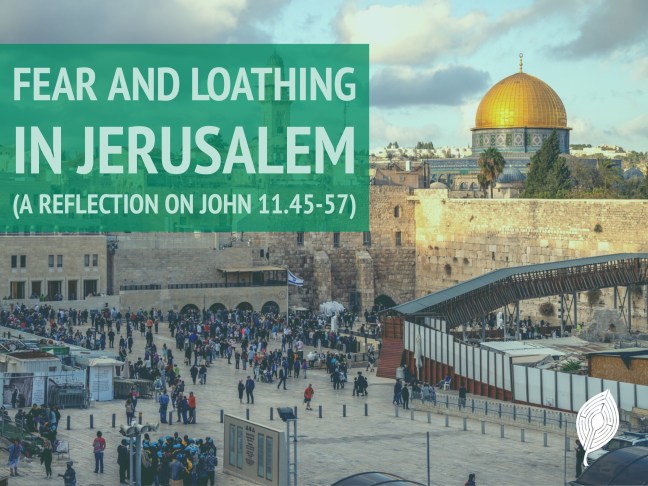
Here we are at the end of Lent. Tomorrow is Palm Sunday, the day when the Church remembers Jesus’ triumphal entry into Jerusalem where he is hailed by the masses as their champion and king. In my liturgical tradition, the same day is also called Passion Sunday, and the story of Jesus’ betrayal, arrest, trials, … Continue reading Fear and Loathing in Jerusalem (A reflection on John 11.45-57)
What grounds your life? What is the most important? What does it mean for you to be? Is it your career? Is it your things? Is it pleasure? Is it your relationships? Is it the quest for Truth? I was reminded of these big questions this morning as I read through the Gospel reading appointed … Continue reading What is (A reflection on John 8.21-30)
An evangelical pastor friend of mine once told me the story of how, a number of years before, he had wanted to do something special for his wife. Life in the church isn’t easy, for spouses as much as for pastors themselves, and through it all, she had stuck with it and with him with … Continue reading Love’s Lavish Gift (A Reflection on John 12.1-8)
“We know that all things work together for good for those who love God and are called according to God’s purpose.” “If God is for us, who can be against us?” “Who can separate us from the love of Christ? Will hardship, or distress, or persecution, or famine, or nakedness, or peril, or sword? … … Continue reading For Good? (A reflection on Romans 8.28ff)