
Visiting so many historical places the past couple of years (Rome and Florence in 2023 and Paris in 2024, in addition to the recent trip to the North of England that has inspired this series), it’s been fascinating to see the different approaches communities take to the history around them.
On the one extreme, many of the important churches in Paris have been in the process of restoring their original, brightly coloured, and highly decorated glory. Several of the ancient sites in Rome are not restoring, but intentionally preserving as much as possible the vivid colours of the remaining decoration. But then there’s a place like Durham Cathedral, which is kept in good and fully operational repair but without restoring the ornamentation that was literally whitewashed during the Reformation. There are also places like the old monastic foundations scattered throughout England, which are kept stable in their ruined state, or the old Roman forts along Hadrian’s Wall that are being actively excavated by archaeologists.
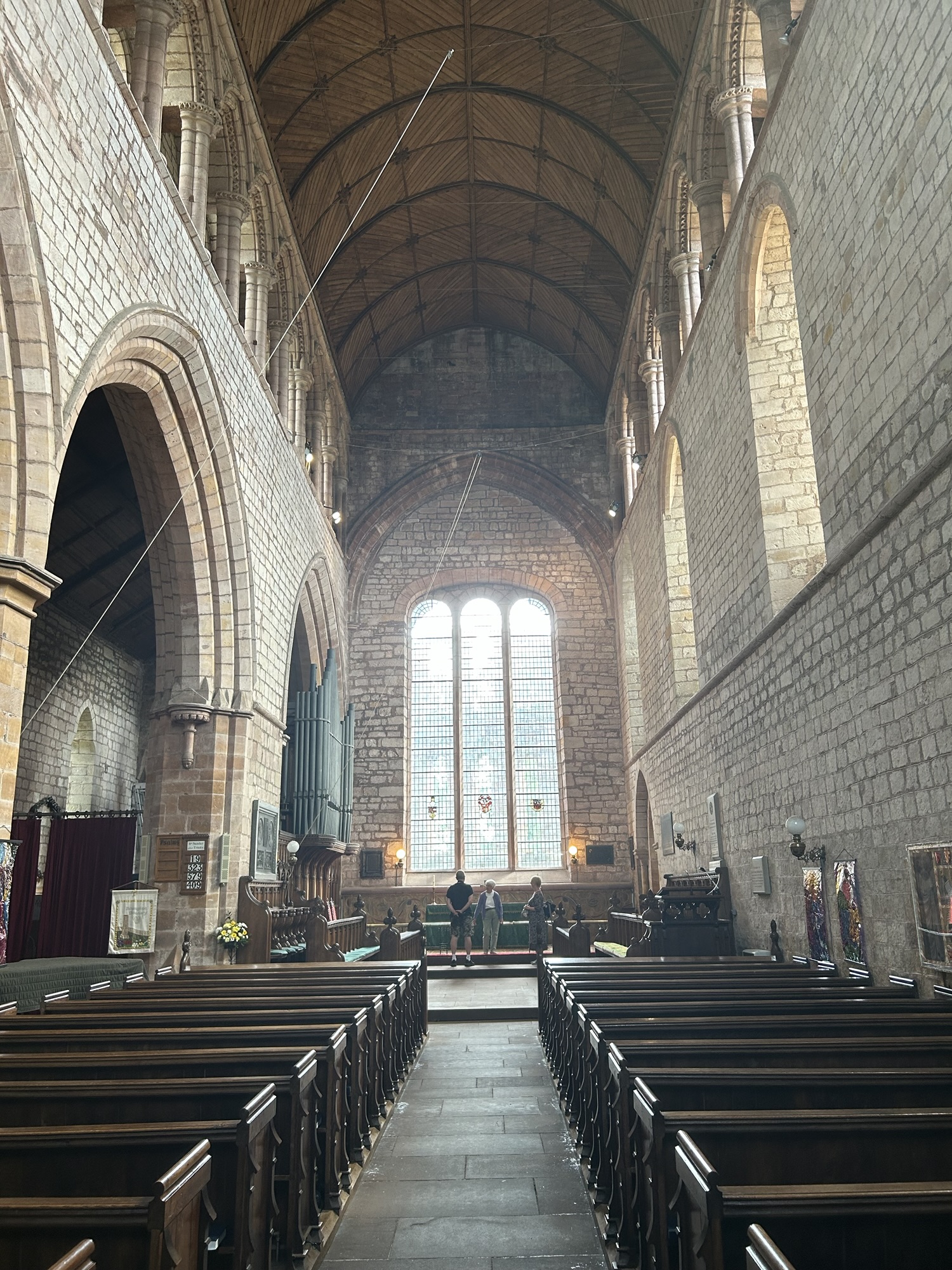
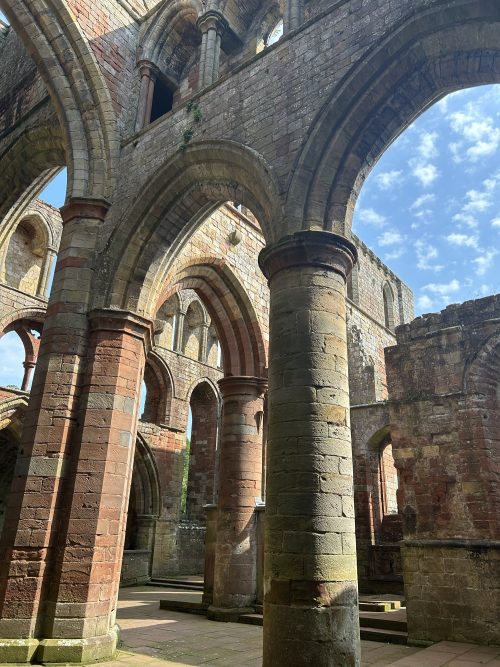
Probably the most unique approach to dealing with this kind of legacy I’ve seen was at Lanercost Priory in Cumbria. While, like many monastic churches in England, the building was used throughout the early modern period as a family chapel, in more recent times, the nave of the church has been kept operational as a local parish church, while the rest of the structure has been allowed to fall into ruin. The juxtaposition between the two is truly remarkable! The thing is, there is not ‘right’ or ‘wrong’ approach. All of these communities are honouring their history and the legacies they’ve received in some intentional way. And the thing is, it requires this intentionality because, especially in places like Rome or Paris or York, not everything can be preserved or restored. Not only would that be cost-prohibitive, but it would make life in these cities impossible, turning them into artifacts instead of the living, breathing, evolving communities we love.
All this made me think about the ways we can deal with legacies of other kinds: our family legacies, religious legacies, political and historical legacies of our countries, and on and on. We are all part of traditions whether we like or not; but the choice of how we handle those traditions is ours to make: What do we want to restore and make alive again? What do we want to preserve as a monument to what was? Even, what will we allow to be bulldozed and built over? These are no small questions. So much of what’s dividing nations in the West right now involves just this question: What do we do with the past we’ve inherited? Just as I don’t think there is a right or wrong answer to the question of how communities should approach the legacies in their built environment, neither do I think there’s a ‘right’ answer for the more philosophical question — provided that our answer actually acknowledges and does not hide the realities of the past.


One thought on “Legacy”