One of the consistent themes that emerged this summer in our series on Romans was the continuity in the ancient world between the language of politics and the language of religion. Both were ultimately about power and allegiance, making it difficult to discern how much the New Testament was intentionally critiquing Imperial propaganda, and how much it was just using shared language. Either way, as much as those of us in progressive spaces may shy away from the language of power in our faith, we have to admit and accept, and I would argue even embrace, that it belongs there.
Today’s Psalm is a great example of how deeply intertwined the concepts of kingship and divinity were in biblical thinking. It reads:
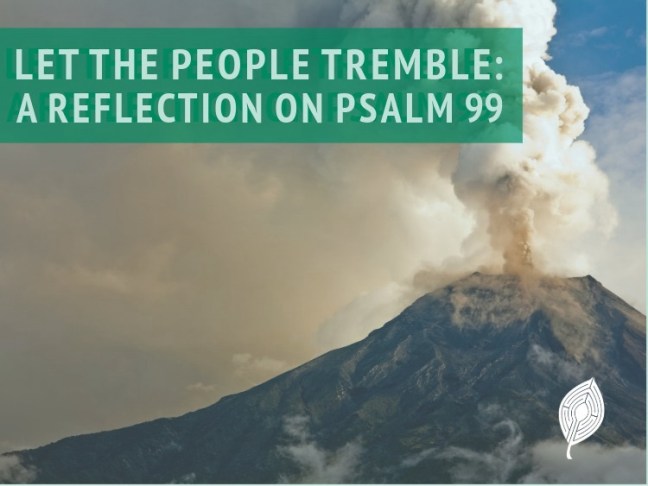
YHWH is king; let the people tremble; he is enthroned upon the Cherubim; let the earth shake.
YHWH is great in Zion; he is high above all peoples.
Let them confess his name, which is great and awesome; he is the Holy One.
“O mighty King, lover of justice, you have established equity; you have executed justice and righteousness in Jacob.”
Proclaim the greatness of YHWH our God and fall down before his footstool; he is the Holy One.
Moses and Aaron among his priests, and Samuel among those who call upon his name, they called upon YHWH, and he answered them.
He spoke to them out of the pillar of cloud; they kept his testimonies and the decree that he gave them.
“O YHWH our God, you answered them indeed; you were a God who forgave them, yet punished them for their evil deeds.”
Proclaim the greatness of YHWH our God and worship him upon his holy hill; for YHWH our God is the Holy One. (Psalm 99)
Texts like us remind us of an important theological truth: if God is the real king, the real power in heaven and earth, then any human claims to power and authority are relative to God. No king, no autocrat, no tech-bro, no billionaire is the ultimate power in our world. And we have not only he capacity but also the responsibility to oppose anyone who claims to have such power — especially when their decisions, policies, and actions stand in opposition to the ways of God’s Kingdom, as revealed in the life, teaching, death, and resurrection of Jesus.
This way teaches that it is the meek, the humble, those who mourn who are blessed, not those who lord their power and influence over others; that the gracious and generous disposition of the heart is the true sign of righteousness; that humility trumps arrogance; and that good intentions and ends never justify evil means.
This is where the revelation of God in and through Jesus always shakes up our expectations. If we want to reject an image of a violent and controlling God, that’s good and right. But that does not mean God becomes our good-natured hippie buddy. Rather God remains God. God remains the all-powerful authority. the Lord over all of heaven and earth, before whom we stand in awe and fear. It’s just that we stand in awe and fear not in terror but in humility and wonder at God’s goodness and all the ways we fall short of it. And it’s in this sense we must rightly say that the world needs more fear of God.
The Lord is king; let the people — including the power-hungry, the billionaires, and the technocrats, and all would-be kings — tremble.

