
Alleluia! Christ is risen!
We’ve spent this whole Lenten and Holy Week Season reflecting on prayers and hymns of the Church. Today on this most sacred and special day of the year, I can think of no better set of hymns than the Orthodox Paschal Stichera, better known by its first line, “Let God arise!” It takes as its starting point Psalm 68.1-3, whose verses are followed by theological reflections on Easter.
It begins like this:
Let God arise and let His enemies be scattered!
A sacred Pascha today has been revealed to us:
a new and holy Pascha, a mystical Pascha
mystical an all-venerable Pascha,
a Pascha that is Christ the Redeemer;
a Pascha immaculate, a great Pascha;
a Pascha of the faithful; a Pascha that has opened the gates of Paradise unto us;
a Pascha that sanctifies all the faithful.
Psalm 68 (67 in the Septuagint tradition used in the Orthodox world) is a challenging piece of Scripture. Much of its translation is speculative due to its large number of unique words, and the events it describes are lost to history. But it is clear that it is a song of praise to YHWH for his prowess in battle. (Remember, YHWH seems to have originated as a local warrior god, who only later accrued the more mature characteristics of kingship and moral wisdom.) Left on the literal level, it’s a disturbing text, speaking in glowing terms of the terror caused by a plundering army. But here in the Easter context, it is transformed into a hymn praising God’s victory over the powers of sin and death. (Such liturgical use of Scripture similarly ‘rehabilitates’ Isaiah 8.8b-10’s idea of “God is with us” from being an exclusive “God is with us and not you” to an inclusive “God is with all of us”.)
Moving on, as we saw the other day, the Orthodox word for Easter is Pascha, which is also the Greek word for Passover. And so these three great events, the resurrection of Jesus, the Jewish Passover feast, and the Exodus which is commemorates, are all linked together. This hymn is telling us that on this Easter morning, a new Passover is revealed for us — sacred, holy, mystical, and venerable — which is nothing other than Christ himself, who redeems us from bondage into the freedom of God’s kingdom life. It is immaculate and great, and it is our Passover too, for it opens the gates of Paradise for us and sanctifies us.
As smoke vanishes so let them vanish!
Come from the vision, O you women, bearers of good tidings,
and say unto Zion: Receive from us the good tidings of the Resurrection of Christ;
Adorn yourself, exult, and rejoice, O Jerusalem,
for you have seen Christ the King come forth from the tomb like a bridegroom in procession.
Now we exhort the myrrhbearing women to speed back from the tomb to proclaim the good news of the resurrection, and Jerusalem to prepare to rejoice for witnessing such an event. Again it plays off of the metaphor of Christ’s death being the ‘consummation’ of his marriage to humanity, now imagining his resurrection like the groom emerging from the bridal chamber. (This is another example of how foolish it is to assume the ancients had Victorian, prudish sensibilities!)
So let sinners perish at the presence of God and let the righteous be glad!
The myrrh-bearing women at the break of dawn stood before the tomb of the Life-Giver;
there they found an angel sitting upon the stone,
and he spoke to them and said:
Why do you seek the living among the dead? Why do you mourn the incorruptible amid corruption?
Go, proclaim unto His disciples!
After dramatizing the events of Easter morning like this, the hymn jumps to Psalm 118.24, before resuming its theological reflection on the new Passover:
This is the day which the Lord hath made; let us rejoice and be glad in it!
Pascha! A beautiful Pascha, the Pascha of the Lord,
the all-venerable Pascha has dawned upon us.
Pascha, with joy let us embrace one another.
O Pascha, ransom from affliction!
For from the tomb today, Christ has shone forth as from a bridal chamber,
and has filled the women with joy, saying:
Proclaim unto the apostles.
Glory to the Father and to the Son and to the Holy Spirit. Both now and ever and unto the ages of ages. Amen.
It is the day of Resurrection,
let us be radiant for the feast, and let us embrace one another.
Let us call even those who hate us ‘brothers’,
let us forgive all things on the Resurrection, and thus let us cry out:
Christ is risen from the dead, trampling down death by death, And upon those in the tombs bestowing life.
Christ is risen from the dead, trampling down death by death, And upon those in the tombs bestowing life.
Christ is risen from the dead, trampling down death by death, And upon those in the tombs bestowing life.
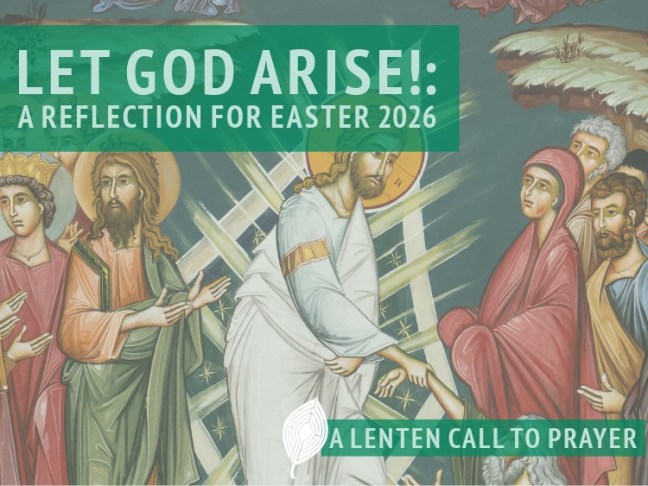
The hymn ends with the words of the Paschal troparion, likely the most famous of all Orthodox hymns (even if it seems to have been based on Egyptian precedents). It proclaims the mystery of Christ’s resurrection: He has risen from the dead, which has destroyed the power of death, thereby giving life to all the dead. Here we have the “Harrowing of Hades” motif, in which Christ descends into the realm of the dead (Sheol in Hebrew, Hades in Greek), which cannot withstand his divine presence and is thereby destroyed.
And really, I can think of no better note upon which to end this series and celebrate this joyous feast. Christ is risen and death no longer has the last word.
Let God arise and let His enemies be scattered!
Christ is risen from the dead, trampling down death by death, And upon those in the tombs bestowing life.
Amen! Amen! Amen! Hallelujah!
 Matthew Root