
[Note: This post was prematurely posted on Friday, November 21, instead of Sunday, November 23 as intended. Oopsie daisy.]
Today marks the last Sunday of the liturgical year in Western Christianity. As such, it is the commemoration known as Christ the King, or Reign of Christ Sunday. It’s a commemoration that a good many people today shy away from, since if we’re not careful it can easily devolve unfaithfully into a kind of imperialist vision for our faith. So I think in this year of our Lord 2025, which has been so dominated by themes and controversies surrounding leadership and governance — and what we as Christians should want and hope for our leaders — it’s a commemoration that is actually as relevant and needed as ever. Because, as the whole New Testament makes clear, if we call Christ our Lord and our King, his Lordship, his Kingship, his rule and his reign are nothing like our human ideals and images of these concepts. (Remember, when Israel begged God to establish a monarchy, God warned them it was a very bad idea, and the biblical record shows that it very much is, no matter who the monarch may be!) The Gospel reading today is a case in point about this upside-down vision of kingship.
It reads:
When they came to the place that is called The Skull, they crucified Jesus there with the criminals, one on his right and one on his left. Then Jesus said, “Father, forgive them; for they do not know what they are doing.” And they cast lots to divide his clothing. And the people stood by, watching; but the leaders scoffed at him, saying, “He saved others; let him save himself if he is the Messiah of God, his chosen one!” The soldiers also mocked him, coming up and offering him sour wine, and saying, “If you are the King of the Jews, save yourself!” There was also an inscription over him, “This is the King of the Jews.” One of the criminals who were hanged there kept deriding him and saying, “Are you not the Messiah? Save yourself and us!” But the other rebuked him, saying, “Do you not fear God, since you are under the same sentence of condemnation? And we indeed have been condemned justly, for we are getting what we deserve for our deeds, but this man has done nothing wrong.” Then he said, “Jesus, remember me when you come into your kingdom.” He replied, “Truly I tell you, today you will be with me in Paradise.” (Luke 23:33-43)
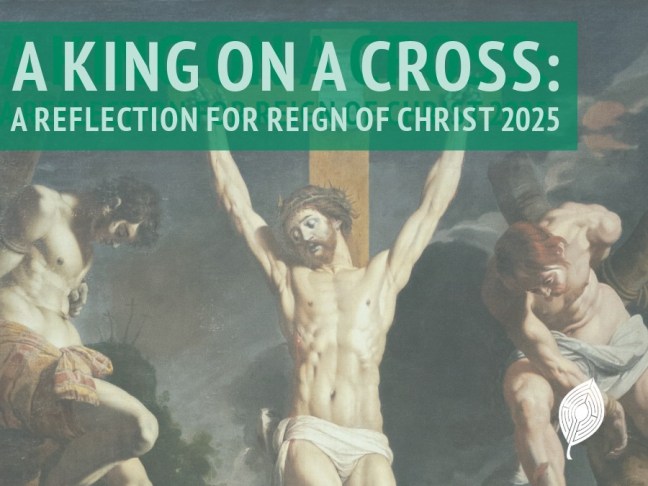
This is a great example of the joys of being in a tradition that makes use of a lectionary. What does our tradition tell us about Christ being our king? That our King is crucified: one not marked by success or domination of others but is one betrayed, rejected, and murdered by a collusion of empire and religion. That even in his death, our King is gracious, loving, and merciful: he forgives those who kill him, has compassion on those who mock him, and welcomes sinners into his Kingdom.
These are the marks of any kingship, and authority, worthy of the name. There’s a reason why the Psalm tells us, “Put not your trust in princes, in the sons of men in whom there is no salvation” (Psalm 146.3). When it comes to the exercise of power, no human can hold a candle to Jesus’ example and legacy.
It’s a simple and short message today, but it’s as important as ever. No God but God. No King but Jesus, and Jesus crucified. Amen. Amen. Amn.
 Matthew Root
One thought on “A King on a Cross: A Reflection for Reign of Christ 2025”