
One thing that definitely marks contemporary Western society apart from traditional cultures (including our own) from around the world, is a decided lack of culturally-sanctioned ways of processing grief and loss. As much as we may look askance at ritualized performances of grief, we are ourselves ironically left bereft of bereavement. This means we don’t know what to do with our grief and loss, especially when it’s complicated grief. This is is on my mind because today marks the one year anniversary of the death of a family member, someone with whom many of us had complicated and messy relationships.
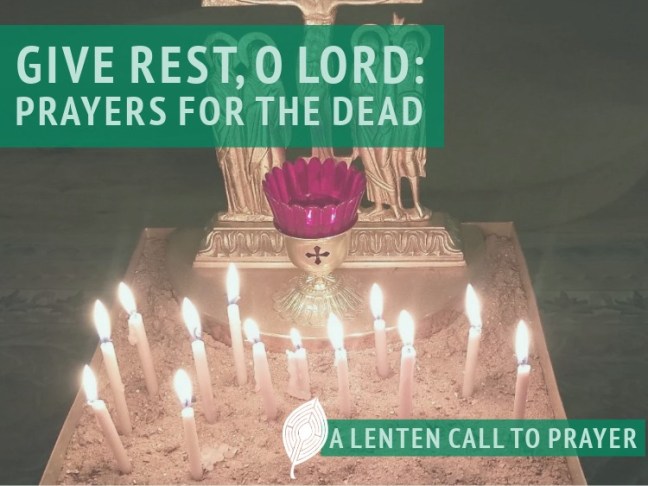
Many traditional Christian cultures have rituals that allow the faithful a place to grieve, but also to slowly move on from that grief. One such example in the Eastern Orthodox Church is the Panikhida, or Prayers for the Dead, which can be done monthly and then annually on the anniversary of death. It’s a beautiful and theologically rich service, that ‘prays what we believe’ about God, forgiveness, and the promise of eternal life.
The Troparion, a short thematic hymn, for the service goes like this:
You only Creator Who, with wisdom profound, mercifully order all things,
and give unto all that which is useful:
Give rest, O Lord, to the souls of Your servants who have fallen asleep;
for they have placed their trust in You,
our Maker and Fashioner, and our God.
So much of human experience is chaotic and senseless. And as much as death is the one tie that binds all life, few things feel as chaotic and senseless as death. In this prayer we re-situate ourselves in God’s ordering wisdom. Note, though, that the prayer doesn’t do this in order to say “everything happens for a reason” or any other glib platitude, but to ask our “mercifully ordering” God to restore order by granting rest to the dead.
In these prayers, we refer to the dead as having “fallen asleep.” I tend not to like euphemisms for death, but this one is biblical and reminds us that as Christians, our hope and trust is that our bodily death is not the end of the story, and that we will awake again in God’s Kingdom. So it’s right to speak in this way here. In particular, we pray that their ‘slumber’ be restful. While the idea of souls not at rest may conjure up images of ghosts, I think the intended idea is a bit different. Death, no matter how we look at it, is a trauma. Whether we die in a car accident, at the hands of an assailant, or in the comfort of our own bed, there is some violence inherent in death — to say nothing of the theological belief that death ruptures the God-created union between body and soul. And so yes, we pray for rest for the weary and violated souls of the dead.
And we pray this with confidence, trusting in God’s goodness and mercy, as revealed in and through the life, death, and resurrection of Jesus. As another prayer in the service puts it, while we “are dust and unto dust [we] shall return,” we do so “making our funeral dirge the song: Alleluia! Alleluia! Alleluia!”
All this is picked up at the close of the service, with the following interaction:
Priest: Grant rest eternal in blessed repose, O Lord, to the souls of your
servants, _________, who have fallen asleep, and make their
memory to be eternal!
People: Memory eternal! Memory eternal! Memory eternal!
Together: Their souls shall dwell with the blessed!
There’s a saying even in secular circles that we don’t truly die until the last person who remembers us dies, that somehow the dead live on in our memories. This ancient prayer understands things in a similar way, only from a position that believes that we live on for ever because to be truly dead would be to be forgotten by God, and a faithful and loving God will never forget us. And so The service ends with the confident proclamation, by priest and people alike: “Their souls shall dwell with the blessed!”
In a culture that tries to deny mortality, hide us from the realities of death, and even pathologizes grief, rituals like this memorial service are not only beautiful but also, I think, important. Loss is real. Grief is real. Death is real. We need ways of processing and dealing with it and it does no benefit to us to shy away from it. However, just as importantly, as Christians we don’t believe that death has the last word, and we need rituals like this to remind ourselves of that.
Grant rest eternal in blessed repose, O Lord, to the souls of your
servants who have fallen asleep, and make their
memory to be eternal!
Memory eternal! Memory eternal! Memory eternal!
Their souls shall dwell with the blessed!
 Matthew Root
One thought on “Give Rest, O Lord: Prayers for the Dead”