
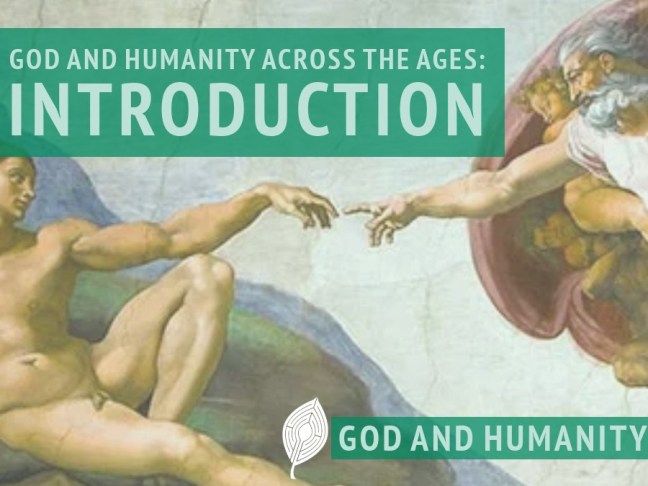
Christians often talk about our relationship with God in terms of a relationship. And indeed, we’re in good company, since our Scriptures describe the dynamic between God and creation, and in particular, between God and people of faith, in just such relational terms. We might even call it a love story. (Though certainly a tumultuous one.) But the thing is, relationships change and evolve over time, and the relationship between God and what we might call ‘God’s people’ is no different. As much as we see continuity throughout the Scriptures, if we’re paying attention, we also see a relationship that changes and evolves over time.
It seems today that many people who call themselves Christians miss this. It’s one of the problems with the flattening of the Scriptures — a vast library filled with different and often competing voices from different times, cultures, and languages — into just The (flat and undifferentiated) Bible in much of contemporary Protestantism. In the desire to see the Bible as telling one overarching story, we can easily miss the differences. I’m not just talking about the New Testament and Old Testament here. If we actually read the texts, we see that Abraham’s relationship with God was different from Moses’. And the picture of God we see in early prophets like Elijah is rather different from the picture painted by later prophets like Isaiah.
These changes didn’t happen at random. Rather, as in any relationship, it changed a) as the people came to know God better over time; and b) as the relationship was challenged by external factors, like changes in politics, technology, culture, and society. So connected do these developments seem that Integral theorists, to whom my thought is significantly indebted, posit that these changes in culture, worldview, and religion are universal. Based on models from various facets of growth in developmental psychology, they have developed a shorthand model through which to discuss the beliefs and attitudes typical of individuals and cultures at different stages. (Note: I have to emphasize there that it’s not that people at a higher stage are ‘better’ or ‘more evolved’ than those at lower stages; only that their belief system is able to account for more complexity in the world. That is really the only criterion.) The shorthand looks like this:
- Magic (Magenta): private, kin-based, experiential, animist, performative acts
- Mythical-Literal (Red): public, tribal, polytheistc, local, ritual acts
- Mythical-Conventional (Amber): universal, monotheistic, moral acts
- Modern (Orange): rational, industrial, materialistic, striving acts
- Postmodern (Green): post-rational, inclusive, diverse, pluralist, welcoming acts
- Integral (Teal): local and global, rational and feeling, personal and collective, hyper-theistic
While no system is able to account for the vast variety of human intellectual, psychological, and spiritual experience, and I’m less convinced than I used to be about the universal claims here, these ideas were developed to account for the cultures of Eurasia and so are at the least well-suited to our study of the development of Hebrew, Israelite, Jewish, and Christian religion. As such they’ll be able to provide some language through which we can discuss what we see in the biblical stories.
And so, over the next few weeks, I’d like to explore the history of this relationship between God and God’s people, how it evolved over time, both as people came to know God better and as history intervened to alter the way they understood their relationship with God — and to think on what that means for us today. It fits into my broader ‘Reading the Bible Better’ project, since once we stop flattening the relationships, we see that the change, the evolution in them, is an important part of that big overarching story the Scriptures are telling.
The series will look like this:
- The God of Creation
- The God of Abraham, Isaac, and Jacob
- The God of Moses
- The God of the Twelve Tribes
- The God of the Kingdom(s)
- The God of the Exiles
- The God of the Prophets
- The God of the Jews of the Second Temple
- The God of the Apostles
- The God of the Generations (Conclusion)
 Matthew Root
6 thoughts on “God and Humanity through the Ages: Introduction”