
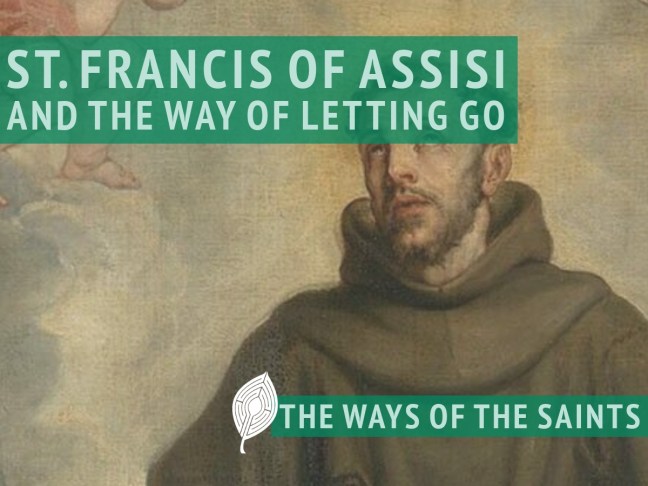
There is likely no Christian in history as highly regarded, throughout history and today, both across the spectrum of Christian belief and outside of it, as St. Francis of Assisi. More has been written about him than anyone else apart from Jesus himself. As Richard Rohr put it, “Francis is … a “prime attractor” —one who moves history and humanity forward just by being who he is” (Foreword to Mirabai Starr, Saint Francis of Assisi, Brother of Creation (2015)). And yet precisely because of this charisma and attractiveness, he’s become something of a slippery figure. The portrayals of him differ starkly, and even in his lifetime his legacy was being redirected in ways he struggled to accept. So there are many places I could go with a post on St Francis and his way of life. Was he first and foremost a political radical? A carer for the poor and sick? A holy fool? An animal lover and ecologist? A queer icon? A missionary? A peacemaker? A mystic? He was in all likelihood both none of and all of these things. I certainly can’t touch on all of these possible St. Francises in this post, so today I’d like to focus on an aspect of his life that cuts across all of these identities: St. Francis’s ability to let go.
The man we know as St. Francis of Assisi was born into a wealthy Umbrian merchant family around 1181 as Giovanni di Pietro di Bernardone. He was by all accounts everything you’d expect from a rich and privileged teenager: confident, charming, cultured, and more than a little entitled and rowdy. He followed his whims, whether towards fine clothing, giving generously to beggars, or playing soldier. The last of these got him into trouble when, at around the age of twenty-one, he was captured by the Perugian army and held captive for a year. The experience changed him, and after his return home, he struggled to adapt back to his old life. The stories show him at a loose end and uncertain how he wanted to live, pushed and pulled between the world of luxury — but also the family and business responsibilities that went along with it — and the world of spiritual and financial poverty. It was as though he longed to be free but was caught between two competing visions of what freedom meant: Is it to be so rich and powerful as to be able to do whatever one wanted? Or is it to become so insignificant and want so little as to be freed from the ties of this world?
In what has become an origin story of sorts for St. Francis, things came to a head when he received a vision of Christ in an abandoned chapel asking him to “Repair My church.” Thinking the vision referred to the ruins he was sitting in, Francis sold textiles stolen from his father’s warehouse to pay for repairs. But, brought before the the authorities for having stolen the goods, he realized his position was untenable, and so he renounced his inheritance, his place in the family business, and by some accounts, even the fancy clothes he was wearing, and dedicated his life to the freedom of poverty. This was the first major act of letting go of Francis’s life and it set the tone for all that was to come after.
In another story, Francis, who had grown up fearful of illness and particularly disgusted by leprosy, felt moved to jump down from his horse and embrace a leper asking for help, thereby letting go for ever of his fears and the way they kept him from loving the sick.
Francis’s simple way of life and extreme devotion attracted notice and, in the process, followers. He drafted a simple but severe rule of life to help the brothers (’friars’) “to follow the teachings of our Lord Jesus Christ and to walk in his footsteps,” and received a guarded blessing from the Pope. The group grew quickly, and over the next decade became so large that Francis’s vision of extreme poverty was lost — Francis himself became so marginal that at one point, a group a friars even turned him away, not recognizing him. Eventually in order to keep the peace he composed a new rule that was far less strict than his original intention, and then he withdrew from public life to live out his vocation quietly. Again we see this ability to let go. He did not grasp on tightly to control the Order he created, whether out of his own ego or out of his conviction that only complete poverty allowed the freedom to love to which he was committed. Instead, he let go of it. This isn’t to say it was easy. As Mirabai Starr writes about this time in his life:
But as his vision of a brotherhood based on the radical values of poverty and humility began to crumble, Francis slipped deeper into a dark night of the soul. … But Francis did not abandon his faith. He turned his radical values inward. He surrendered to the poverty of feeling nothing. He embraced the ineffable knowledge that comes only with unknowing. His Beloved was stripping Francis of everything that stood between them.
So much more could — and has — been said about St. Francis of Assisi. But I think this brief sketch has been enough to convey the sense of his life. I’ve focused as I have on his ability to let go because the tendency to cling to things, even to our detriment, is as universal a human problem as there is. One of humanity’s great philosophical and religious traditions, Buddhism, even identifies it as the ultimate source of all suffering! (And I don’t think it’s wrong on that.) Paul’s Letter to the Philippians identifies the cessation of this clinging as the key to the way of Jesus seen so strongly in the Incarnation:
Let the same mind be in you as in Christ Jesus:
Who, though he was in the form of God,
did not regard equality with God as something to be clung to,
but emptied himself,
taking the form of a slave (Philippians 2.5-7)
St. Francis’s way offers us repeated examples of what this might entail. At critical moments of his life, he let go of his wealth, his family privilege, his fears of illness and disgust at the disfigurement of leprosy, and even his life’s work. And what’s amazing is that this didn’t make him cold and distant. Bur rather:
Every act of renunciation brought Francis closer to the world. By stripping away the protective layer of his own desires, he came into direct contact with the Source of all satisfaction. By graciously declining the gift of mundane marriage and taking Lady Poverty as his bride instead, Francis fell in love with All That Is. (Mirabai Starr).
This is where his famed love for all of creation, which I was not able to touch on in this post, came from. It was as though in letting go of the world, he received it back a hundred-fold.
And even though our instincts tell us that legging go of our egos, allowing ourselves to become smaller in the world’s eyes, will make us insignificant, the more Francis did this the brighter and bigger he shone, and continues to shine, with the light of God. As such, he remains a wonderful guide for all of us who call ourselves Christian. He has inspired millions over the generations, and in the next two posts I’ll look at two other Saints who took their inspiration directly from his way.
Praise to you, Saint Francis of Assisi,
brother to the sun and the moon, to birds and worms, fire and wind.
Your unconditional love of creation excludes no one.
When you embraced the leper, anything left between you and your God melted away.
In our habitual grasping, we have lost the joy of letting go.
Whisper in our ear, Francis.
Let us live your simple wisdom,
and seek not so much to be understood as to understand,
to be loved as to love.
Thank you.
Amen. (Mirabai Starr)
 Matthew Root
6 thoughts on “St. Francis of Assisi and the Way of Letting Go”