
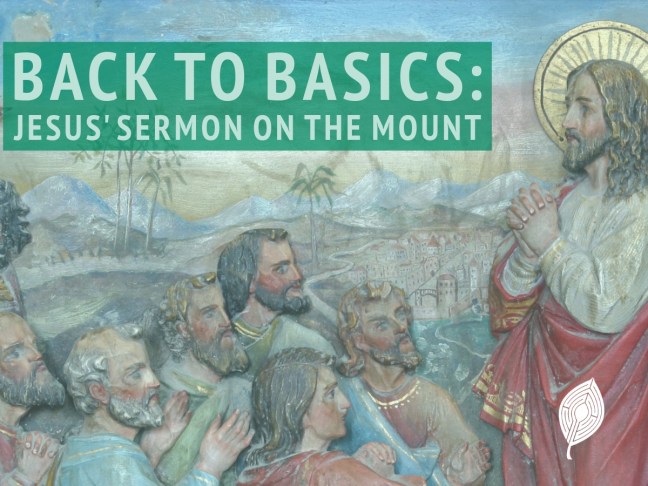
I’ve had a habit over the past couple years of my main Fall series here being about putting Christian theology up to an external lens to better understand ourselves through the face of another: Integral thought in 2021, Indigenous spiritualities in 2022, and principles of permaculture in 2023. But when I look at the state of Christianity today, it seems to me that the only mirror we need right now is the Gospel itself. The things most self-proclaimed Christians care about — religiously, politically, and socially — seem to bear little resemblance to the concerns of the New Testament, and even less to the concerns of Jesus. And so over the next few weeks, I’d like to go back to the basics of Christian teaching and explore Jesus’ Sermon on the Mount, found in chapters 5 through 7 of The Gospel according to St. Matthew. These three lengthy chapters contain many of Jesus’ best-known teachings: the Beatitude, the ‘hard sayings’, the Lord’s Prayer, the Golden Rule, and have long been the centrepiece of Christian discipleship and ethics. And it feels past time for the Church to return to them.
There’s a long-standing idea that each of the Gospels informally represents one section of the Jewish Scriptures, with Matthew representing the five books of the Law, Luke taking up the Prophets, Mark the Apocalyptic strains of the Writings, and John the Wisdom texts. With this in mind, it’s not surprising that Matthew contains five lengthy sets of teaching:
- Sermon on the Mount (Chapters 5-7)
- Teachings on the Proper Behaviour of Apostles (10)
- Collection of Parables (13)
- Teachings on Community (18)
- Apocalyptic Teachings (24-25)
As the first of the discourses, the Sermon on the Mount sets the tone for the rest, for the Gospel of Matthew, and for the New Testament as a whole.
In the next post in the series, I’ll look at how Matthew’s Gospel sets the stage for the Sermon. Then, I’ll start going through the discourse section-by-section.
I trust that this exercise will not only be challenging and encouraging for all of us, but will also be a spiritual balm in these fractious times, and allow us all to reset to our original Christian factory settings grounded in the worldview, spirituality, and ethics of Jesus.
 Matthew Root
15 thoughts on “Back to Basics: Jesus’ Sermon on the Mount”